Land Sales · Singapore Property Planning
A Record $1,612 psf ppr in Sin Ming: What Eco World's Bid Means If You're Buying Around Bishan
Seven bids, a Malaysian developer’s first Singapore government land sale, and a new record for a pure-residential Rest of Central Region plot. The land price is not your buying price. But it does set a floor, and the floor is now higher than it has ever been for this kind of site.
 Isaac Lee · PropNex Realty · Updated Sep 2026
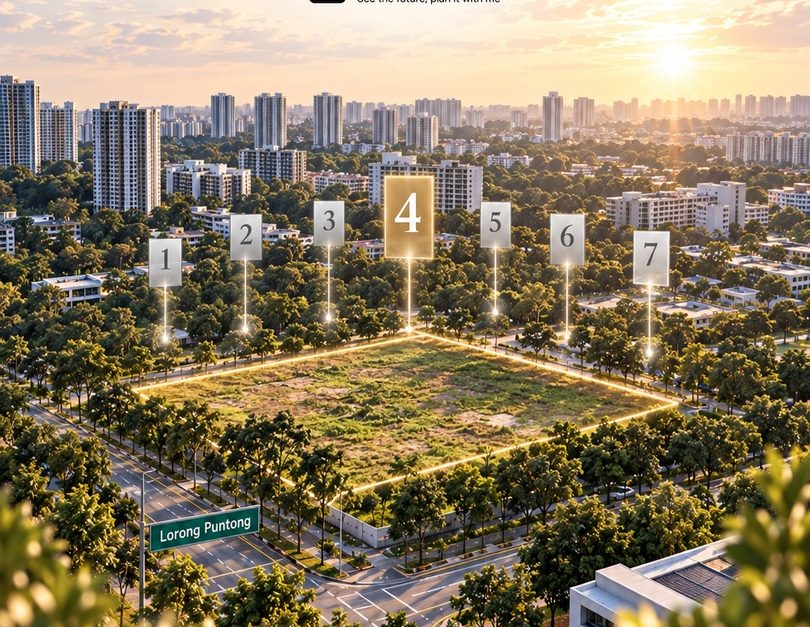
A Malaysian developer that had never bid in a Singapore government land sale before just set a record in Sin Ming. That is the headline. The part that matters to you is what a land price of this size does to the price you will eventually be asked to pay for a two-bedder there.
What was actually sold
The second-highest bid came from Intrepid Investments and TID Residential. The tender closed on 15 September 2026.
Seven bids is the real signal. The gap is the warning.
These two numbers say different things and both are true.
Seven bids means the site was genuinely wanted. One aggressive bid can be a single developer’s private view of a location, or a land bank that needed replenishing. Seven separate parties running seven separate feasibility studies and all deciding the site was worth competing for is a much broader statement about demand for new supply in this pocket.
An 11.1% gap to second place says the winner’s view of the site is not the market’s view of the site. Six other developers looked at the same land, the same plot ratio and the same catchment and stopped roughly $25 million lower. That premium has to be recovered somewhere, and there is only one place it can come from.
Seven bids tell you the site was wanted. An 11% gap tells you one buyer wanted it more than the market did.
From land price to launch price
This is the arithmetic most coverage leaves out. A developer’s breakeven is not the land price. It is the land price plus everything that happens afterwards: construction, financing through the build, professional fees, marketing, agent commissions, and the cost of carrying unsold stock against development charge timelines.
On a small, high-specification site, that stack has generally been running in the region of $800 to $900 psf in recent projects. Add it to $1,612 and the breakeven sits somewhere around $2,400 to $2,500 psf. Developers do not build at breakeven, so a normal margin puts an indicative launch range in the high $2,000s to low $3,000s. Some analysts have publicly floated $3,000 to $3,100 psf.
Treat that as a range, not a forecast. Nothing about the launch price is fixed yet: product mix, unit sizes, the state of the market in 2027 and 2028, and how hard the developer chooses to push all move it. A record land bid makes a high launch price likely. It does not make it certain, and it certainly does not make it good value.
About 140 homes is a strategy, not a footnote
This is a small site. Around 140 units is a fraction of the 500 to 1,000-unit launches most buyers have got used to.
Small cuts both ways. In the developer’s favour: a small inventory can be cleared without the deep discounting that a large project sometimes needs at the tail end, which supports pricing. Against it: fixed costs are spread over fewer units, the facilities deck will be modest by new-launch standards, and monthly maintenance on a small development is usually higher per unit than on a large one because the same pool, gym and management contract are shared among fewer owners.
If you are comparing this future launch against a 700-unit project elsewhere, compare the maintenance fee estimate as carefully as you compare the psf.
Why developers wanted this corner
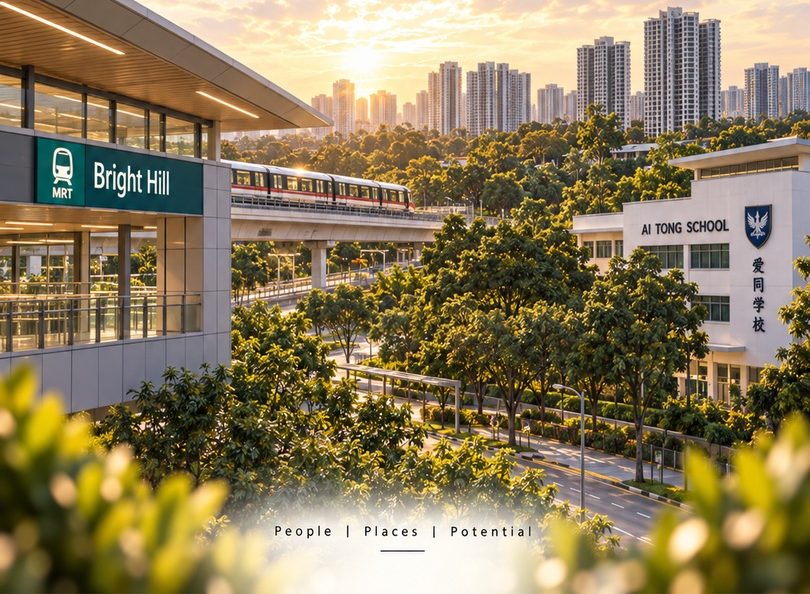
The location does real work here. Bright Hill MRT on the Thomson-East Coast Line is close, and Bright Hill is planned as an interchange with the Cross Island Line, which turns a single-line station into a two-line one. Ai Tong School anchors the area for families who plan around primary one registration. The surrounding fabric is low-rise and stable, so a new project does not have to compete with a wall of comparable new stock going up beside it.
Scarcity is the underrated part. Bishan and the Sin Ming stretch have not seen much new private supply, which is exactly the condition under which seven developers show up for one small plot.
Land cost tells you the developer’s floor. Nearby resale tells you the buyer’s ceiling. A launch only works when there is room between them.
The check most buyers skip: the resale gap
Before you decide a future launch is attractive, price the alternative. The comparables to pull are the newer projects in the same catchment — Thomson Three, Thomson Impressions and the Bishan stock around Sin Ming Avenue.
Do this yourself rather than taking an agent’s summary, including mine. Pull the last twelve months of caveats from URA’s residential transaction search, filter by project and by unit size band, and work out the median transacted psf for the layout you actually want. Then compare that figure against the indicative launch range above.
A new launch will always command a premium over nearby resale. That premium pays for a new lease, a new building, and the option to buy before completion. Historically, a gap of roughly 15 to 25 per cent over comparable newer resale has been digestible. When the gap stretches toward 40 per cent or more, you are no longer paying for the location, you are paying for newness — and newness is the one thing that depreciates from the day you collect keys.
Four things I would check before buying it
- Entry price against the resale gap. Not against the last new launch elsewhere in Singapore. Against what the same catchment transacts at today.
- Layout efficiency. On a small site, the difference between an efficient 700 sq ft two-bedder and an awkward one is most of your liveable space. Ask for the floor plate, not just the psf.
- Competing supply in your exit window. Count what else can launch in this catchment before you plan to sell, including any sites still in the government land sale pipeline.
- Your exit buyer pool. At a high entry price in a small project, who buys it from you in seven years, and what will they be comparing it against?
What I would actually do now
Nothing, yet. A record land bid is not a reason to buy and not a reason to panic-buy elsewhere. It is a dated piece of information that tells you roughly where this launch has to price. Wait for the actual price sheet, then run it against the resale gap above.
If you are already weighing options in the Upper Thomson and Bright Hill stretch while you wait, Thomson Reserve sits in the same Thomson-East Coast Line catchment and gives you a live price reference rather than a projected one.
Related reading: how a nearby government land sale reprices the estate around it.
Sources: URA government land sale tender results for the Lorong Puntong site, September 2026, and contemporaneous market reporting on the tender outcome. Bid figures, site area and yield are as published at tender close. Launch-price ranges are indicative estimates, not quoted prices.
Frequently Asked Questions
How much did the Lorong Puntong GLS site in Sin Ming sell for?
Eco World Development submitted the top bid of S$208.1 million, which works out to S$1,612 per square foot per plot ratio. The tender closed on 15 September 2026 and attracted seven bids. The second-highest bid, from Intrepid Investments and TID Residential, was S$187.33 million or S$1,451 psf ppr, so the winning bid was 11.1 per cent higher.
How many units will the Sin Ming Lorong Puntong site have?
The site is about 46,103 sq ft with a maximum gross floor area of about 129,093 sq ft, and is expected to yield roughly 140 private homes. That is a small development by current new-launch standards, which usually means a modest facilities deck and a higher maintenance cost per unit than a large project.
Will the new Sin Ming condo launch at $3,000 psf?
It is possible but not confirmed. Adding typical construction, financing and marketing costs of roughly $800 to $900 psf to a land cost of $1,612 psf ppr puts breakeven near $2,400 to $2,500 psf, and a normal developer margin on top of that puts an indicative launch range in the high $2,000s to low $3,000s. Some analysts have suggested $3,000 to $3,100 psf. The final price depends on product mix, market conditions at launch and the developer’s own strategy.
Does a record land bid mean nearby resale prices will rise?
Not automatically. A high land price raises the likely price of the future new launch, which can make nearby resale look better value by comparison and sometimes lifts resale sentiment. But resale prices are set by what buyers actually transact at, not by what a developer paid for land. The useful exercise is to measure the gap between the projected launch price and current transacted resale psf in the same catchment, then decide whether that gap is worth paying.
Wondering whether to wait for this launch or buy resale now?
Tell me your budget and timeline, and I will pull the actual transacted psf for the Sin Ming and Bishan comparables so you can see the gap for yourself.
Usually replies within the day · Isaac Lee, PropNex Realty