Infrastructure · Singapore Property Planning
The North-South Corridor Just Slipped Two Years. Here's What That Changes for Buyers in the North
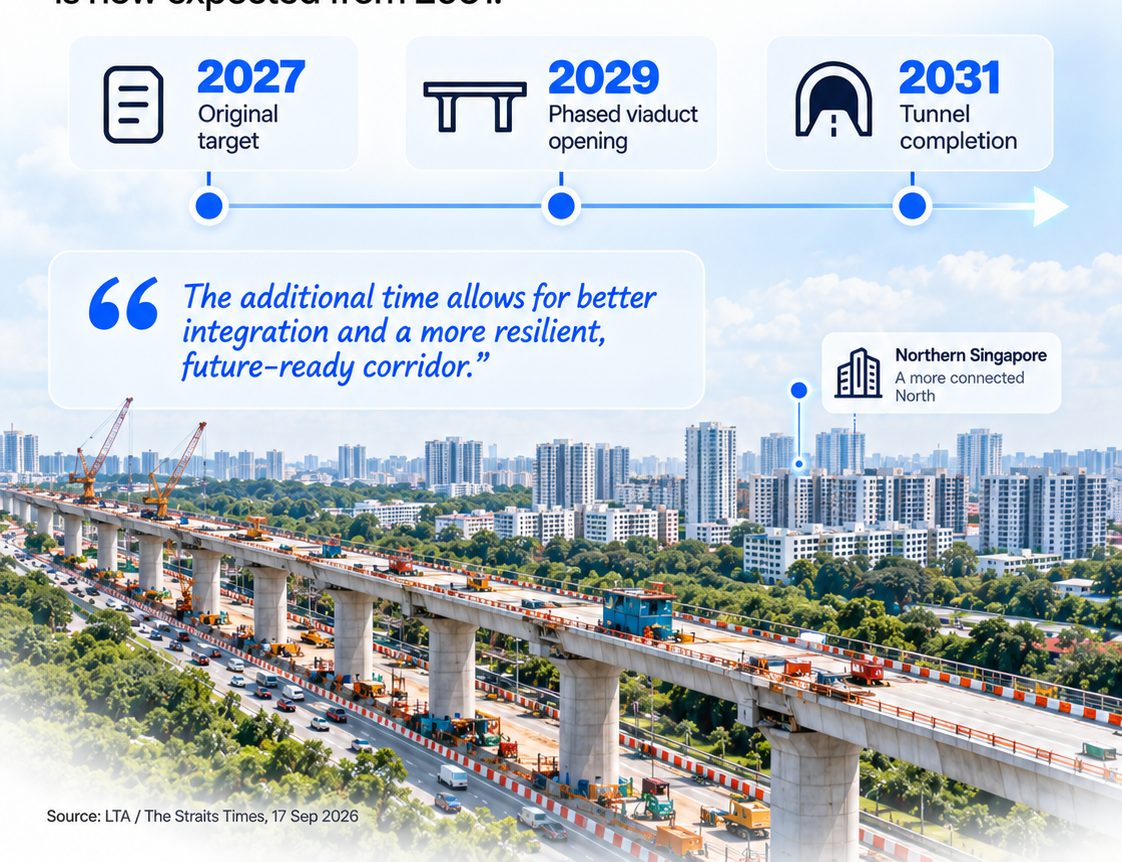
LTA has pushed both halves of the corridor back by two years. The viaduct now opens in phases from 2029, the tunnel from 2031. If you are buying anywhere between Woodlands and Novena, the destination has not changed, but the arrival time has, and that is a different calculation than most people are making.
 Isaac Lee · PropNex Realty · Updated Sep 2026
Every north-side launch brochure for the last three years has carried some version of the same line: the North-South Corridor is coming, and your commute to town is about to get shorter. That is still true. It is just two years further away than the brochure said.
What LTA actually announced
The corridor was never a single opening date. It is built in two structurally different halves, and both have moved:
Read the word phased carefully. Neither date is the day the whole thing works end to end. It is the date the first usable stretches open, with the rest following. A buyer planning around "2029" is planning around the beginning of a rollout, not the end of one.
Why it slipped: two separate ground problems
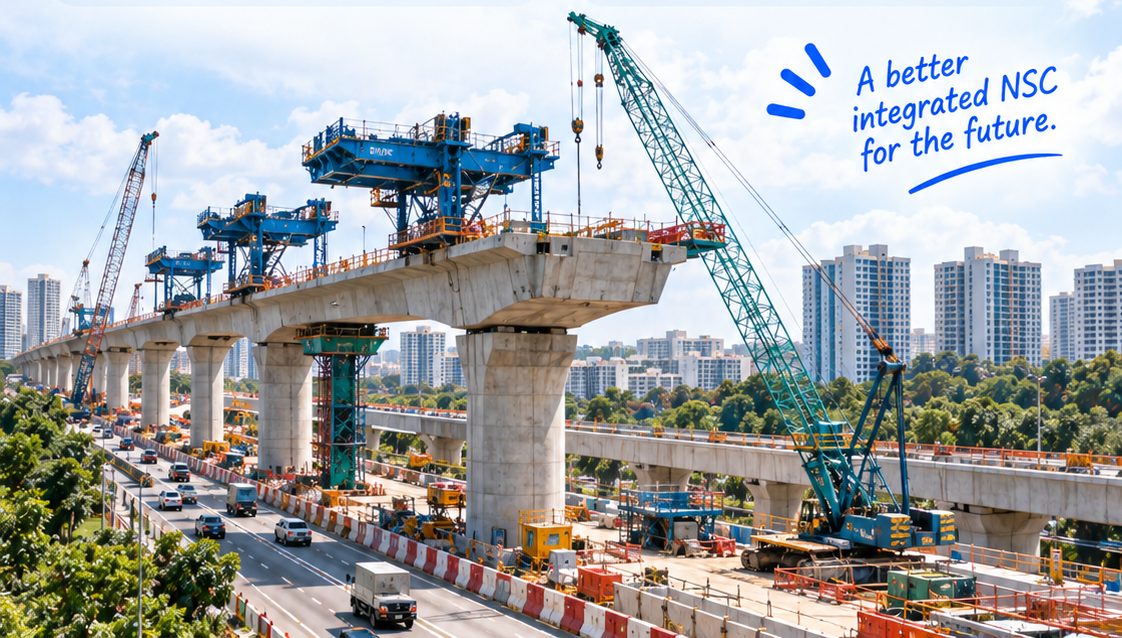
This is not a budget delay or a contractor dispute. LTA's detailed studies turned up two unrelated engineering conditions, one at each end of the project.
Gambas Avenue and Woodlands Avenue 8. The rock under the northern viaduct alignment is harder than expected, and it sits higher than expected. Both of those slow down the same thing: driving the foundations. Harder rock means slower piling. Higher rock means the piling hits it sooner and more often across the alignment.
Novena. The tunnel has to pass beneath the live North-South Line MRT tunnel, and the ground there is fractured rock carrying groundwater. Tunnelling through fractured, water-bearing rock under an operating MRT line is not something you speed up. It requires a more time-intensive mining method, because the acceptable amount of settlement above your head is close to zero while trains are still running.
The delay is the safety margin, not a substitute for it.
That distinction matters when you are judging whether a project is in trouble. A two-year slip announced after detailed ground studies, with named causes at named locations, is a project being re-planned around what the ground actually is. It is a very different signal from a schedule that quietly drifts without explanation.
What the corridor still delivers
None of the delay changes the specification. The North-South Corridor is a 21.5km route billed as Singapore's first integrated transport corridor: continuous dedicated bus lanes running the full length, a cycling trunk route that stitches together the local cycling networks inside HDB towns and the island-wide Park Connector Network, plus more pedestrian routes and barrier-free crossings. LTA's own estimate is that bus commuters save up to 15 minutes from the north into the city.
Fifteen minutes each way, five days a week, is roughly two and a half hours a week back. That is the number that gets capitalised into northern property values, and it has not been reduced. It has been postponed.
Towns along the corridor
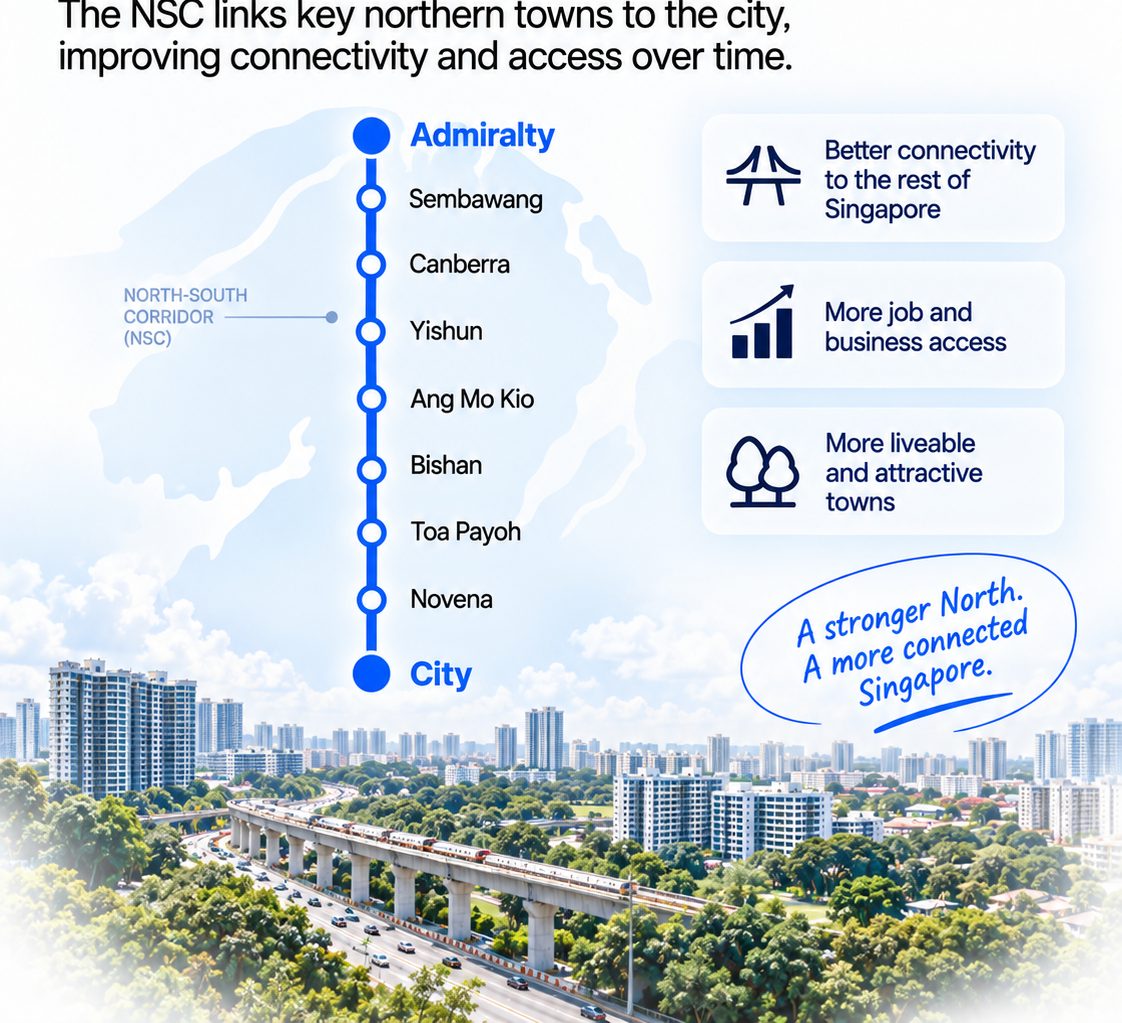
The alignment runs roughly from Admiralty Road West to the East Coast Parkway, passing:
- Admiralty, Sembawang, Canberra, Yishun — the viaduct half, now from 2029
- Ang Mo Kio, Bishan, Toa Payoh, Novena — the transition into the tunnel half, now from 2031
- The city — the ECP end of the tunnel
If your estate is not on that list, the corridor is a nice-to-have for you, not a pricing factor. Bukit Panjang, Choa Chu Kang, the east and the west all sit off the alignment. Be careful with any pitch that stretches "improved connectivity to town" over a town the corridor does not touch.
You are not being asked whether the corridor is worth it. You are being asked whether you want to own the benefit two years before it exists.
What a two-year slip actually does to a buying decision
Here is the part the news coverage skips. Run the delay against your own holding period, because it lands very differently depending on which of these you are.
If you are buying a new launch in the north now. Do the arithmetic before you panic. A project launched in 2026 or early 2027 typically completes around 2030 to 2031. Under the old schedule, the northern viaduct would have opened years before you got your keys, and you would have been buying into connectivity that was already priced in and already visible. Under the new schedule, the viaduct arrives close to when you actually move in. For an owner-occupier with a 2030 TOP, this delay is almost neutral. You were never going to use the corridor from your current address anyway.
This is the situation for the current crop of northern launches, including the Woodlands Drive EC, Wynwood Grand, which sits at the Woodlands end of the viaduct half. Its completion window and the viaduct's phased opening now sit much closer together than they did a month ago.
If you are buying resale in the north to hold for three to five years. This is the group the delay actually costs. Your exit window was 2029 to 2031 with a fully open corridor as the story you sell into. Now the tunnel half will not be complete in that window, and the viaduct half will be mid-rollout. If part of your thesis was "sell into the completion story," that story has moved past your exit date. Either extend the hold or stop paying a completion premium for it.
If you are looking at the Upper Thomson and Lentor stretch. Lentor Avenue is the seam between the two halves, which means that area is exposed to the 2031 tunnel date rather than the 2029 viaduct date. Projects around Bright Hill and Upper Thomson, such as Thomson Reserve, already have Thomson-East Coast Line MRT access as the primary connectivity story, so the corridor is a secondary layer for them rather than the main event. That is the right way round. When rail access is already there, a road delay is an inconvenience rather than a thesis breaking.
If you are a long-hold owner. Two years on a thirty-year hold is noise. Do nothing.
The one thing to actually change
Stop treating "NSC coming soon" as a present-tense feature and start treating it as a dated one. When an agent or a brochure raises the corridor, ask two questions: which half, and does that date land before or after my exit. Viaduct towns get 2029. Lentor onwards gets 2031. Both are phased.
Infrastructure premiums in Singapore are usually paid in two instalments: a first bump when the project is announced, and a second when it opens. The announcement bump for the corridor was banked years ago. The opening bump just moved two years to the right. If you are paying today as though both have already happened, you are paying 2031 money in 2026.
Related reading: what is actually being built in Woodlands, for the wider picture on the northern corridor's other moving parts.
Sources: LTA, North-South Corridor, and LTA's September 2026 update on the revised viaduct and tunnel opening phases. Figures are as at publication date.
Frequently Asked Questions
When will the North-South Corridor be completed?
It opens in two stages, both two years later than previously announced. The viaduct section, running from Admiralty Road West to Lentor Avenue, now opens in phases from 2029 instead of 2027. The tunnel section, running from Lentor Avenue to the East Coast Parkway, now opens in phases from 2031 instead of 2029. Both are phased openings, so the full 21.5km corridor is not usable end to end on day one.
Why was the North-South Corridor delayed?
LTA identified two separate ground conditions during detailed studies. Along Gambas Avenue and Woodlands Avenue 8, the rock is harder and sits higher than expected, which slows the piling and foundation work for the viaduct. Beneath Novena, the tunnel has to pass through fractured rock with groundwater inflow, directly under the live North-South Line MRT tunnel, which requires a slower and more controlled mining method.
Which towns does the North-South Corridor serve?
The corridor runs roughly from Admiralty Road West to the East Coast Parkway, serving Admiralty, Sembawang, Canberra, Yishun, Ang Mo Kio, Bishan, Toa Payoh, Novena and the city. Woodlands and Upper Thomson sit at either end of the northern stretch.
Does the North-South Corridor delay affect property prices in the north?
It changes the timing, not the destination. A new launch bought in 2026 or 2027 typically completes around 2030 or 2031, so for most buyers the corridor now arrives close to when they move in rather than years before. The practical effect is that any price you pay today for corridor connectivity is being paid two years earlier than the benefit lands, which matters most to short-hold buyers and barely at all to long-hold owners.
Not sure which half of the corridor your estate sits on?
Send me your estate or the project you're looking at, and I'll tell you whether you're on the 2029 date or the 2031 one, and whether it should change your timing.
Usually replies within the day · Isaac Lee, PropNex Realty